The figure below shows the appearance of the LSFG system, which consists of a fundus camera, a 3D stage, and a personal computer running measurement software and analysis software. Options may include an external fixation light and a motorized optical table. The laser uses near-infrared light, so compared to ordinary observation light illumination, there is virtually no stimulus to the eye. Under the class classification based on IEC60825-1, it has been classified as Class 1 by a third-party calibration organization, confirming its safety. In recent instruments, the fundus alignment is also performed using near-infrared light, making measurement even easier. The measurement is completed in just a few seconds, and the results can be saved as image files.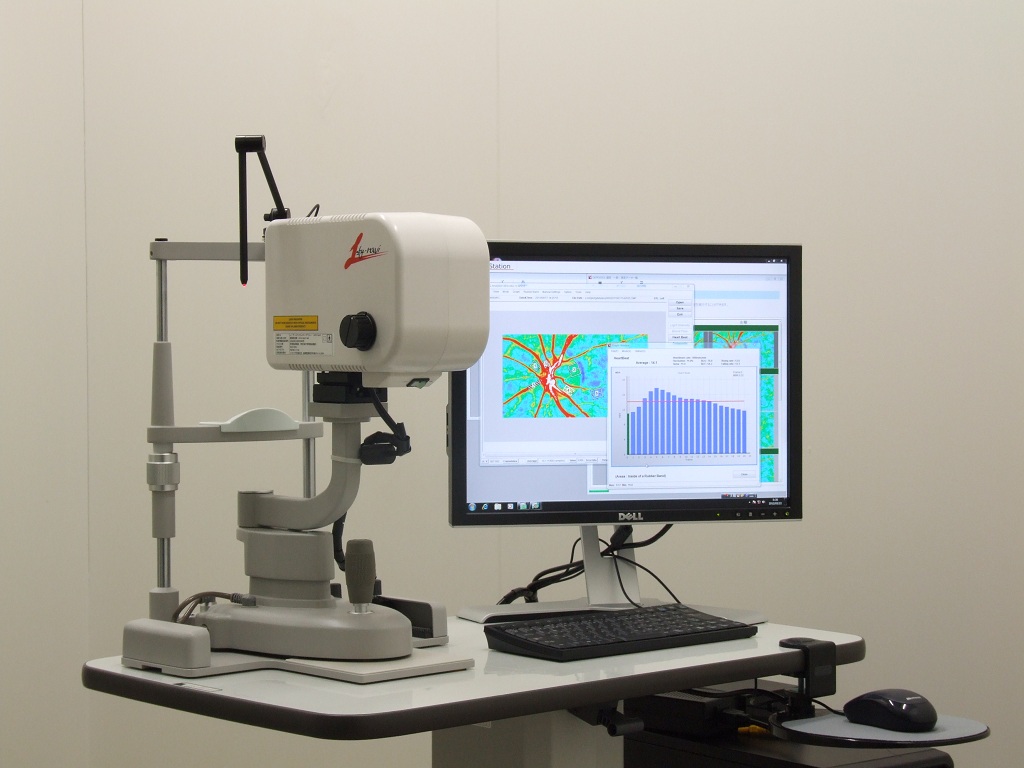
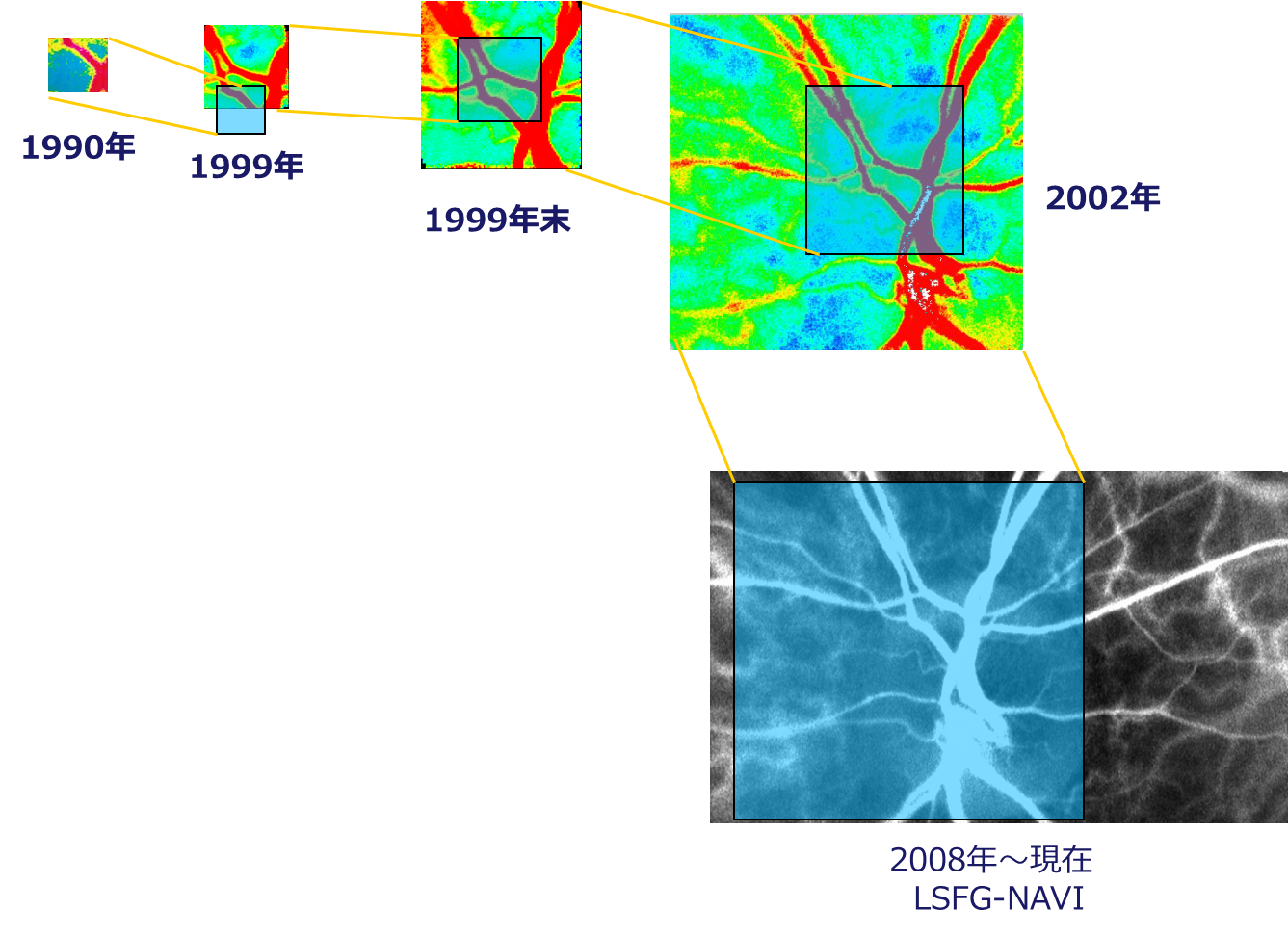
The figure below shows how the map size has evolved throughout the history of ophthalmic LSFG development.
In the early days, only a very small portion of the optic nerve head could be measured at one time, but with improvements to the instrument, the current LSFG-NAVI can capture the area from the optic nerve head to the vicinity of the macula in a single measurement.
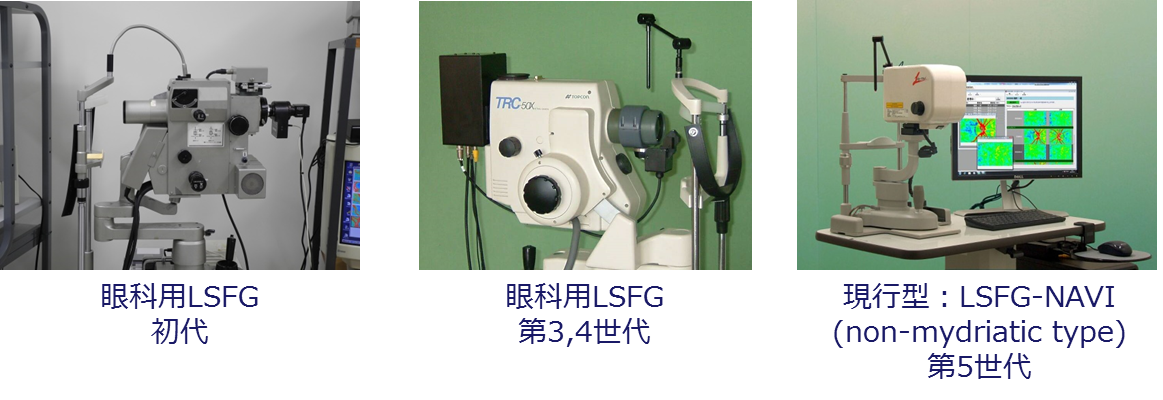
The appearance of the device has also changed. From the first generation to the fourth generation, the configuration consisted of attaching a laser output unit and sensor unit to a fundus camera.
In the fifth generation, which obtained medical device certification, the camera unit became a dedicated unit.