Select your language

Advancing fundus blood flow science

The fundus is the only place
in the body where blood vessels
can be observed directly.

Measuring not just blood flow volume, but its waveform — the quality of flow — to capture the earliest signals of vascular change. That is what LSFG makes possible.

Certified in Japan since 2008 FDA-cleared 510(k) 2016 600+ peer-reviewed publications 90+ research institutions

Softcare is the company that first commercialized LSFG technology as a certified medical device, and continues to advance it.

01 — What is blood flow?

Blood flow is the foundation of life.

Every cell in the human body depends on blood flow to receive oxygen and nutrients, and to remove metabolic waste. From the heart to the brain, to the eye, to the fingertips — blood flow sustains every organ, every moment.

01
The body's invisible infrastructure
Like the roads, water, and electricity of a city, blood flow operates silently in the background — essential, yet rarely noticed until something goes wrong.
02
Reaches every corner of the body
Oxygen and nutrients are delivered to every cell; metabolic waste is carried away. This continuous exchange is what keeps every organ functioning.
03
Change begins before symptoms appear
Just as infrastructure degrades quietly before it fails, blood flow can change long before structural damage or clinical symptoms become visible.
02 — Why does blood flow matter?

When blood flow falters,
the body suffers.

Impaired blood flow underlies many of the most serious diseases known to medicine. What these conditions share is a common origin: disruption of blood flow at the microvascular level.

Glaucoma
Reduced optic nerve head perfusion is implicated in the progression of glaucomatous damage, often preceding detectable visual field loss.
Diabetes & Metabolic Disease
Microvascular dysfunction is a hallmark of diabetic complications, affecting the fundus, kidneys, and peripheral circulation.
Cardiovascular Disease
Fundus(Retina and Choroid) blood flow waveform parameters have been shown to correlate with systemic arteriosclerosis markers including baPWV and carotid IMT.
Neurological Conditions
Cerebrovascular changes and neurodegenerative processes have been linked to alterations in fundus microcirculation.

Critically, changes in blood flow often precede structural damage. Observing blood flow continuously offers a window into the earliest stages of disease — before irreversible harm has occurred.

03 — Why waveform? Why the retina?

Flow volume tells you something.
Flow waveform tells you more.

The dynamic pattern of each cardiac cycle — systolic peaks, diastolic troughs, pulsatility indices — carries far richer data about the true condition of the microvasculature than volume alone.

Conventional assessment
Blood flow "volume"
Average velocity or perfusion volume. Tells you whether flow is high or low — but cannot reveal the dynamic behaviour of the vasculature.
LSFG assessment
Blood flow "waveform"
Beat-by-beat waveform acquisition. Systolic peak, diastolic trough, pulsatility index, waveform asymmetry — multi-dimensional vascular dynamics.
0s 2s 4s

And where is the ideal site to observe this waveform?
The Fundus (Retina and Choroid).

The fundus is the only tissue in the human body where blood vessels can be observed directly, low-invasively, and in real time. Fundus microcirculation reflects the systemic microvascular environment — making the fundus a uniquely privileged window into the body's vascular health.

04 — LSFG technology

From research
to clinical practice.

Softcare is the company that first commercialized LSFG technology as a certified medical device, and continues to advance it.

Low-invasive, 4 seconds per shot
Real-time 2D blood flow mapping
Various quantitative waveform parameters
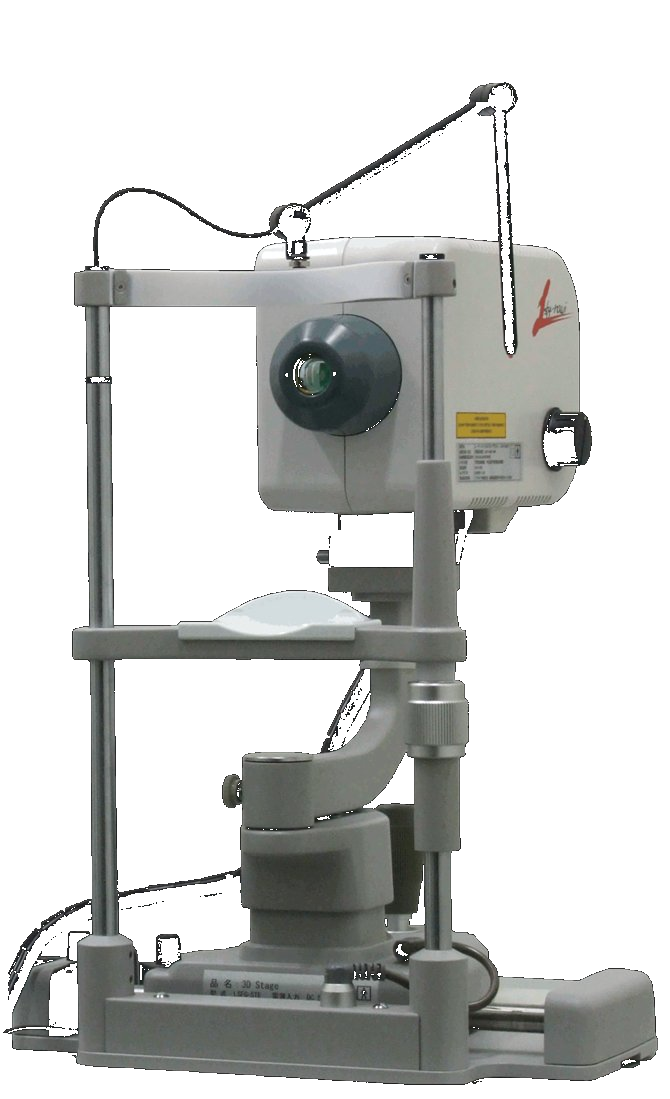
Medical device model: LSFG-NAVI
Research models: LSFG-LITE / LSFG-Micro for animal experiments
600+
Peer-reviewed
publications
90+
Research institutions
worldwide
2008
First certified
in Japan
2016
FDA-cleared
510(k)
Learn more about our products →
LSFG-NAVI medical device
05 — Research applications

From the fundus,
a window into systemic vascular health.

LSFG technology has been utilized in a broad and growing range of research fields, reflecting the fundus's unique position as a direct and low-invasive observation point for microvascular physiology.

Ophthalmology — Glaucoma
Waveform analysis in glaucomatous damage
Waveform analysis of optic nerve head blood flow has been used to study microcirculatory changes associated with glaucomatous damage and the effects of surgical intervention.
Shiga Y et al. IOVS, 2013
Takeshima S et al. IOVS, 2019
Ophthalmology — Diabetic Retinopathy
Fundus microcirculation in diabetes
Fundus microcirculation observed by LSFG has been studied in relation to systemic vascular changes in diabetic patients, including correlations with carotid artery resistance.
Sawada S et al. Diabetes Res Clin Pract, 2020
Hanaguri J et al. Sci Rep, 2021
Ophthalmology — Retinal Vascular Occlusion
Microvascular resistance in vein occlusion
Waveform-based assessment of retinal microvascular resistance has been investigated in central and branch retinal vein occlusion, including its potential as a predictor of macular edema recurrence.
Matsumoto M et al. TVST, 2020
Hashimoto R et al. Diagnostics, 2024
Ophthalmology — Choroidal Circulation
Choroidal blood flow beyond ocular disease
Choroidal blood flow waveforms have been studied in chorioretinal diseases as well as systemic conditions such as pregnancy-induced hypertension, demonstrating the breadth of LSFG applications.
Saito M et al. IOVS, 2015
Yata K, Hashimoto R et al. AJO Case Rep, 2020
Cardiovascular Medicine
Systemic arteriosclerosis correlations
Correlations between fundus blood flow waveform parameters and systemic arteriosclerosis markers, including baPWV and carotid IMT, have been reported from multiple institutions.
Shiba T et al. Graefe's Archive, 2012
Ebuchi Y, Nagaoka T et al. Sci Rep, 2022
Neurology / Neurosurgery
Cerebrovascular monitoring
Fundus blood flow changes during carotid endarterectomy and correlations with cerebrovascular conditions have been investigated at multiple centres.
Motoyama Y et al. J Clin Monit Comput, 2020
Yoshida S et al. Acta Neurochir, 2020
Metabolic Disease
Microcirculation in systemic metabolic conditions
Studies have examined fundus microcirculation in patients with diabetes, chronic kidney disease, and metabolic syndrome across multiple institutions.
Shiba T et al. J Diabetes Res, 2017
Iwase T et al. Life, 2023
Sports Science / Preventive Medicine / Aging
Microvascular aging and exercise physiology
Fundus blood flow waveform data have been used to study physiological responses to exercise and to estimate microvascular aging using machine learning, with implications for health promotion research.
Magi S, Maruyama T et al. Sci Rep, 2026
Ikemura T, Hayashi N. Eur J Appl Physiol, 2012

Blood flow assessment holds the potential to inspire entirely new research themes — from the elucidation of disease mechanisms to a deeper understanding of human health. We look forward to the discoveries that lie ahead, together with researchers worldwide.

Blood vessels are working quietly, right now.
Our mission: to bring the technology that listens
to their voice — to the world.

Softcare Co., Ltd.