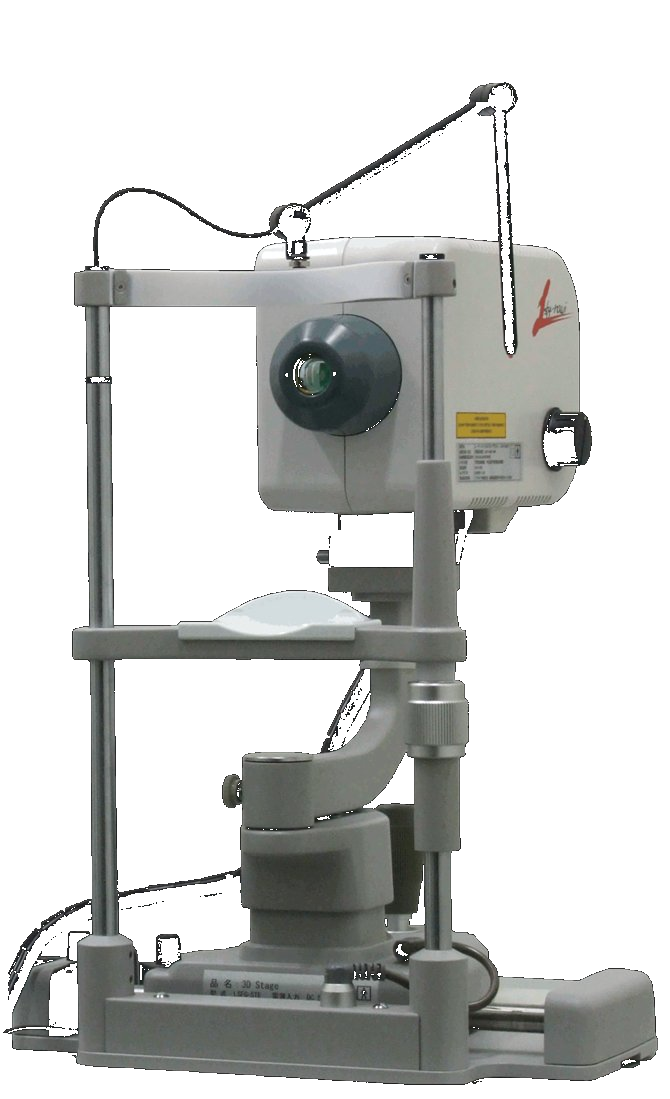
When measuring in a darkened room, first have the subject rest quietly for about 5 minutes after entering the room. Since the subject has been in a physically active state when coming into the darkened room from outside, they should rest quietly to allow blood pressure to stabilize and to adapt to the darkness of the room. For measurement, we recommend taking 5 measurements if possible, analyzing the composite blood flow map, removing the 2 measurements that show the maximum and minimum blood flow values within the rubber band at the analysis site, and adopting the average blood flow value of the remaining 3 measurements.
If time constraints make it absolutely impossible to take 5 measurements, you may take 3 measurements, and if the variation among these values is small, these values may be adopted. As a guideline for variation, we suggest using 5% of the measured value.
If you take 3 consecutive measurements at the same location and the values still vary significantly, there may be something important that has been overlooked.
For example:
- Is the iris pattern and pupil edge visible sharply in the pupil observation screen (the small black-and-white screen within the display)? (If this is blurred, the distance between the camera and the eye is not appropriate, which is one cause of variation.)
- Are there many black shadows appearing on the retina when the laser is turned on? (Have the subject blink several times in succession to remove debris from the corneal surface.)
- Is fixation poor, with many errors occurring? (Many X marks appearing on the blood flow map.)
Blood flow within retinal vessels and retinal tissue blood flow can be observed as a two-dimensional map. Areas with faster blood flow are displayed in red tones, while areas with slower blood flow are displayed in blue tones. At present, it is not possible to display blood flow as absolute values such as millimeters per second; however, comparisons such as a certain percentage decrease relative to surrounding areas, normal sites, or previous measurements are fully feasible. Blood flow maps are displayed continuously at 30 frames per second, so blood flow variations due to heartbeat in arterial vessels can also be observed. Blood flow can be imaged within an area of approximately several millimeters square on the fundus. Even if the measurement site shifts due to fixation movement, since a wide area is originally being observed, measurement can continue until the area moves out of the field of view, so data is not wasted. Although the measurement site shifting may seem inconvenient at first glance, software has been developed to semi-automatically stitch these maps together, enabling measurement of an even wider area at once. Although not as clear as retinal vessels, choroidal blood flow maps can also be observed quite well.